For a limited time, enjoy discounts on our most popular park model tiny homes. Now is the perfect time to build your development, adventure retreat, wellness resort, or dream home.
Luxury hospitality cabins. Two-story single family homes. Student housing. Mixed-use communities. These are not building types traditionally associated with modular building methods, but offsite construction can deliver all of these and more with a high level of execution—and with superior quality control, accelerated timelines, and far greater budget predictability than conventional site-built methods.
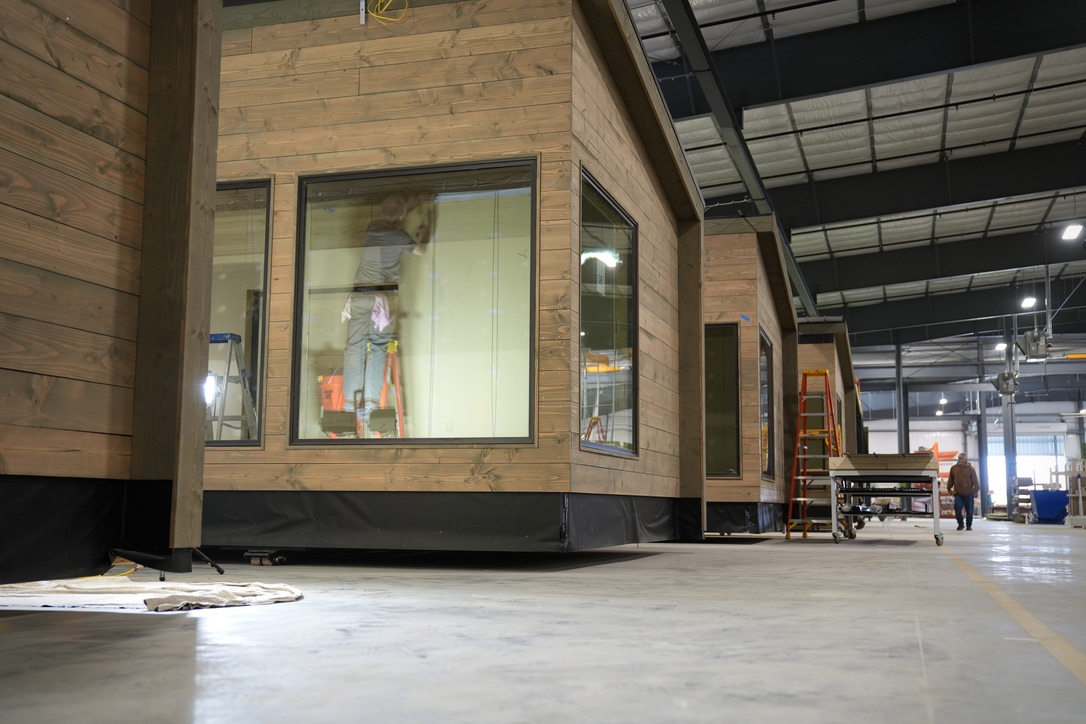
At Wind River Built, we design and manufacture customized modular structures across a wide range of hospitality and residential applications. Each project is engineered to International Code Council (ICC) standards, constructed in our 100,000-square-foot Tennessee manufacturing facility, and delivered for permanent installation on a site-built foundation.
Speed, Precision, and Construction Control
The primary advantage of modular construction is not simply speed, it’s control. Offsite manufacturing allows schedule certainty, quality consistency, and risk reduction that is difficult to achieve in traditional site-built construction.
By building in a controlled facility, we eliminate weather delays, reduce schedule volatility, and minimize dependence on subcontractor networks. This translates to shorter timelines, tighter cost control, and predictable delivery schedules, keeping projects on track from start to finish.
Our vertically integrated process also creates a single point of accountability across design, production, and delivery, streamlining communication and reducing coordination gaps that often slow conventional builds.
Design-Led from the Start
Wind River engages early with developers, architects, and engineers to eliminate front-end risk and redesign cycles. Whether a project begins as a simple sketch or a near-complete construction set, our in-house design team and engineer partners guide each client through pre-construction validation, plan optimization, and if necessary, modular adaptation.
This early alignment allows us to resolve structural systems, transportation constraints, MEP coordination, and code requirements well before fabrication begins. And our vertically integrated approach creates a single point of accountability across design, production, and delivery, streamlining communication and reducing coordination gaps. During production, we have dedicated project managers that maintain transparency and ease of communication for our clients throughout each phase of the project.
Factory Accountability vs. Fragmented Job Site Crews
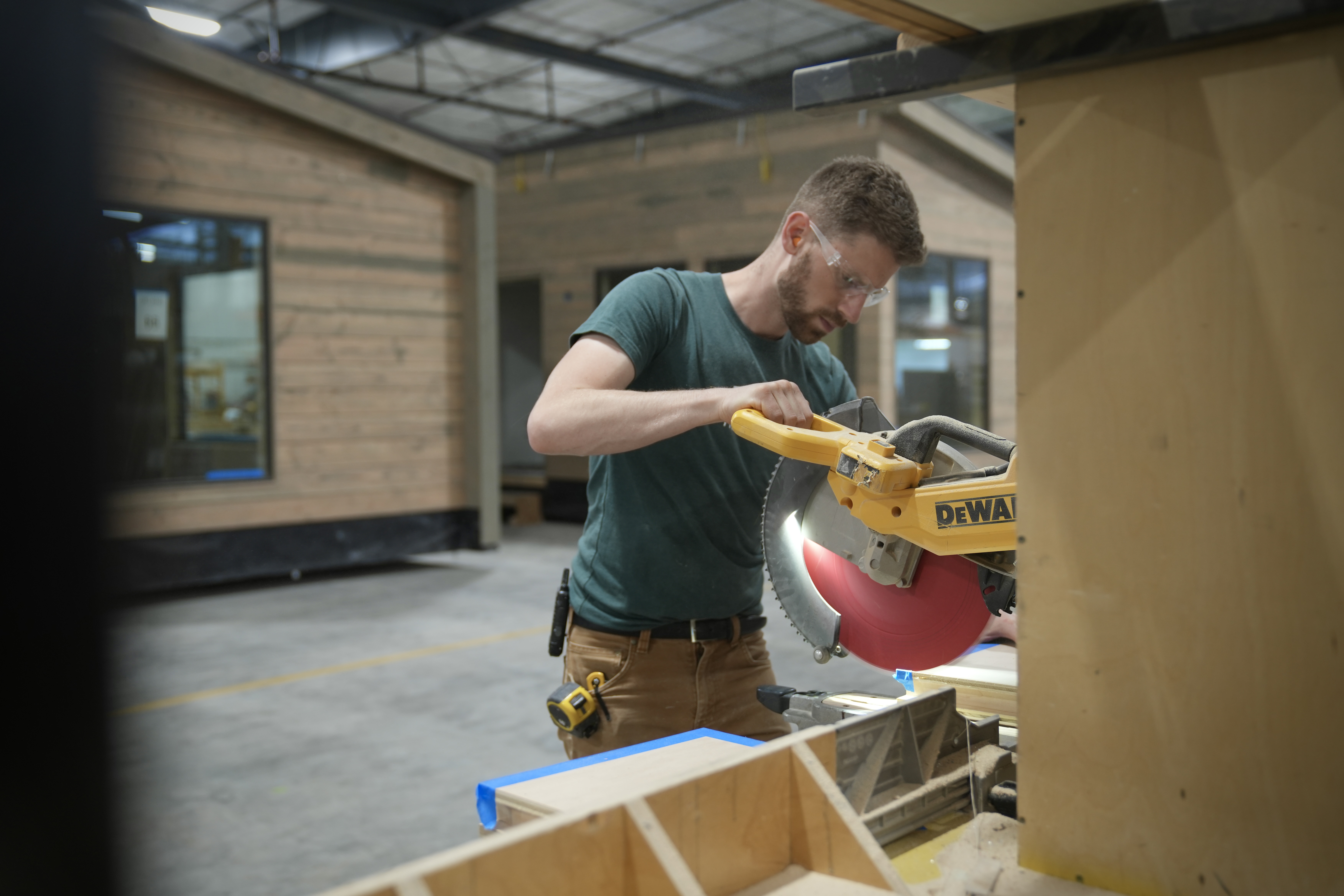
Unlike traditional site construction where multiple subcontractors may never work in proximity, the factory environment creates a higher level of accountability throughout the build. Each trade operates in direct coordination with the next. Framers align with finish crews. Plumbers anticipate electrical pathways. Systems coordination becomes proactive rather than reactive.
The result is a level of precision and consistency that is difficult to replicate in the field. We invite developers and project teams to tour our facility and experience the difference firsthand. Not every builder holds the same standard, but Wind River was built on a commitment to quality, consistency, and customer experience—and it shows in every project we deliver.
Modular vs. Manufactured: A Critical Distinction
A common point of confusion in the market is the difference between modular construction and manufactured housing.
Wind River builds ICC-code modular structures, which comply with the same residential and commercial building codes as site-built construction.
– Permanently affixed to foundations – Fully inspected to state and local code – Appraised as real property – Eligible for conventional, FHA, and VA financing
Manufactured homes, by contrast, are built to HUD standards, a separate federal code system, and often face zoning limitations, financing restrictions, and lower long-term valuation due to their classification and construction standards. Wind River does not produce HUD-manufactured housing.
Read more about the differences between modular and manufactured housing, read What is a Modular Home?
Appraisal and Long-Term Value
From a valuation standpoint, modular homes are appraised using the same methodologies as traditional site-built homes. Comparable sales, material quality, architectural detailing, energy performance, and market demand drive valuation—not the construction environment.
This means high-quality modular projects achieve market-rate appraisals, conventional loan eligibility, and long-term appreciation consistent with site-built counterparts.
Developers choose Wind River for modular construction primarily for three reasons: schedule certainty, controlled quality, scalable customization and quality, and streamlined services. We bring design, engineering, certification, fabrication, and logistics coordination under one roof, reducing friction and ensuring the success of your project.
For sites with limited access, complex topography, or crane delivery constraints, we also offer panelized and hybrid construction systems. These solutions maintain the same quality standards while enabling greater flexibility in transportation and on-site assembly.
Experience the Wind River Difference
Specifications alone can’t communicate the full impact of modular manufacturing with Wind River. The difference becomes apparent when you walk through a finished unit—where tolerances, material transitions, and detailing reflect the consistency and attention to detail. We are positioning ourselves at the leading edge of what’s possible with offsite construction—partnering with developers who care deeply about quality, execution, and brand integrity.
Many of our development partners share that their perception of modular building changed after seeing the process in person. That shift matters. Modular construction is not a commodity—it is a delivery method that demands the same rigor, design discipline, and execution standards as any high-performance building system.
If you’re evaluating offsite construction for a current or future project, we welcome the opportunity to explore alignment, constraints, and opportunities specific to your project.





.avif)


